Cart 0
Cart 0

 Serviceware: What is Compostable?

Understanding Compostable Serviceware
Compostable serviceware is designed to break down in a composting environment and turn into simple substances like water, carbon dioxide, and biomass. It decomposes at a rate similar to other organic materials, unlike traditional plastics, which can persist in the environment for hundreds of years.

It's important to note that "compostable" differs from "biodegradable." While biodegradable items break down eventually, the term doesn't specify how long the process takes or under what conditions. Compostable items, on the other hand, adhere to strict standards and must fully decompose in a composting facility within a specific timeframe.


Types of Compostable Serviceware

Paper-Based Products
Paper plates, napkins, and coffee filters are examples of paper-based products that are generally compostable. However, not all paper products are created equal. Some may have a plastic coating that hinders decomposition, so it's always essential to check for these additives before throwing them in the compost bin.

Plant-Based Plastics (Bioplastics)
Plant-based plastics, made from renewable resources like cornstarch or sugarcane, are becoming increasingly popular. The two most common types include:

  • PLA (Polylactic Acid): Found in cups, containers, and utensils.

  • CPLA (Crystallized Polylactic Acid): A heat-resistant version of PLA, typically used for hot beverage lids and some utensils.

Both types are compostable in the right conditions, typically requiring industrial composting facilities.

Fiber-Based Products
Fiber-based products, such as molded fiber containers made from sugarcane bagasse or wheat straw, are another compostable option. These items break down in composting systems and are common among takeout containers and bowls.

Tips for Choosing Compostable Serviceware

Look for Certifications
Not all compostable products are created equal. Certification from reputable organizations like the Biodegradable Products Institute (BPI) or ASTM International ensures that a product meets established compostability standards.

Know Your Composting Facility's Requirements
Certain compostable products, such as PLA and CPLA, require specific conditions to break down effectively, conditions typically only found in industrial composting facilities. Unfortunately, home composting systems often do not reach the necessary temperatures to break down these items, which means they may not fully decompose in your backyard compost bin.

Minimize Contamination
Food residue can slow down the composting process. To maximize the benefits of compostable serviceware, scrape off excess food before composting. This simple step can help prevent contamination and ensure your serviceware breaks down properly.

Why Proper Disposal Matters
Placing compostable items in the trash undermines their purpose, as they will end up in a landfill, where they will decompose without oxygen and may produce methane, a potent greenhouse gas.

Ready to start composting with ease? Discover how GoZERO's services can help you implement a convenient composting solution and make it a part of your daily routine. Together, we can create a cleaner, more sustainable future. Contact us today!


Where can I get compostable serviceware and other products?

Below is some information we’ve gathered to try to make it easier to source fiber-based and BPI-certified (plant-based) plastic-based products that are compatible with our composting broad-spectrum service.

Please make sure to check the specific products you're looking at.  Items labeled something like "biodegradable" is not the same as compostable.  If in doubt, send us a link to support@gozero.org, and we'll double-check for you!

Please send us ideas, pain points, feedback, product/vendor reviews/recommendations, and other thoughts on how we can help make the admittedly arduous and usually pricy task of sourcing compostable products easier.

When contacting the vendors below let them know you got their information from GoZERO, and thanks as always for using GoZERO to sustainably dispose of your food waste!

  • Karim Eddnadni

    P: 859-999-0224

    keddnadni@mogalixe.com

    https://www.mogalixe.com/  - focus on developing products and ideas that help preserve our environment

    Their solution is to provide their customers with durable compostable biobased products. Using biobased compostable products can dramatically decrease the products' contribution to pollution. Biobased compostable break down in a short period of time after being disposed of and leave no visible contaminants or toxic residue.

    Their compostable biobased products are made from plant-based raw material, our plant-based raw material is developed and made in the USA, using only abundant, surplus crops.

    They use sugarcane as opposed to cornstarch, so they are home compost compatible and break down easily.

    They can do custom work for businesses.

  • Elly Ventura

    1500 Valley House Dr, #210

    Rohnert Park, CA 94928

    O: 707 582 2808 x 759

    elly.ventura@worldcentric.com

    Worldcentric.com - World Centric was named after the belief that we need to think beyond ourselves (ego-centric), and think about the world (world-centric). With this mindset, World Centric was created in 2004 as a nonprofit organization to elevate awareness of global sustainability issues. Today, it continue to uphold the same mission and values to be of service to people and the planet in all that it does.

    Responsible Products Limited
    Merrell Wood

    1181 US-50 Milford, OH 45150

    O: 888-988-6627

    merrell@responsibleproducts.com

    responsibleproducts.com - Responsible Products is a newer relationship for us in the compostable serviceware space, but their service, breath of products, and ability to custom print items is awesome.

  • Vegware.com - the only completely compostable packaging company operating globally

    Vegware was our very first contact for compostables and is incredibly well connected locally, nationally, and internationally.

    Bio-Futura
    ‍ ‍biofutura-us.com

    Going Green Services
    Michael Bauer

    325 W. Main St. Newark, OH 43055 (Central Ohio)

    O: 740.400.0014

    info@goinggreenservices.com

    GoingGreenServices.com - certified compostables and eco-friendly serviceware

    *MUST be the "compostable" bags, NOT "biodegradable" bags

    Mike has been an awesome local partner, ready and able to help you get the supplies you need.

  • Tom Goldy

    1059 Broadway, Suite F Dunedin, FL 34698

    P: 727-789-1646

    tom@biobagusa.com

    BioBagUSA.com - a world leader in providing bags and films for the collection of organic waste

    Tom is a great commercial sales contact with the widest selection of compostable bags we’re aware of. BioBag is very involved in the national composting scene. For a few starter bags try their Amazon Store.

    BioStar by Pitt Plastics
    Dan DiRienzo III

    25470 Kilreigh Dr.Farmington Hills, MI 48336

    c: 248-770-2329

    ddirienzo@inteplast.com

    PittPlastics.com/products/green_solutions/biostar - focused on quality, service, and consistency 

    Dan reached out some time ago and we see a lot BioStar bags in our carts. Also find them on Amazon.

  • 93 Alpha Park, Highland Heights, Ohio 44143 (NE Ohio)

    Steven & Aaron Saks

    (877) 341-5464 Mon-Fri 9am-8pm EST

    customerservice@greenpaperproducts.com

    greenpaperproducts.com

    The Biodegradable Products Institute (BPI)

    bpiworld.org/CertifiedCompostable

    The Biodegradable Products Institute provides a certification to certain products that will compost in a timely and non-problematic fashion in commercial composting facilities. They are the de facto standard and a great place to get started learning about what products are out there. We need for your chosen compostable plastic product to have this certification, and here is the place to find everything.
 Food Waste-Based Compost: Benefits and Uses

recent study by the University of Florida showed that compost made from food waste contains up to 3.5 times more nitrogen, phosphorus, and potassium (macro nutrients NPK) than compost made from yard waste alone, making it a much more nutrient-rich source of soil amendment.

Composting food waste also helps to reduce nutrient runoff into nearby waterways, making it an important part of any sustainable food system. What should you do with nutrient-rich food waste-based compost? Food waste-based compost is not ideal for use as a ground cover. Think of it more as a sustainably produced peat moss or as a "non-fertilizer" fertilizer alternative. Technically, it's a soil amendment that fosters plant and soil health by aiding nutrient and moisture retention.

If mixing a potting or bed mix
Mix 1 part food waste-based compost to 5 parts soil (i.e., 15%-20% compost) as a good baseline. Increase the ratio as desired. However, planting plants in a mix that is greater than 80%-85% compost to soil is not advisable because plants require elements from actual silicate dirt/soil beyond those that are available from compost. For this reason, retailers typically sell pre-blended soil mixes rather than pure compost.

If planting plants from the garden store
For smaller plants, using a one-pint plug or smaller, and adding 1/2 cup of food waste-based compost to the bottom of the planting hole typically yields the best results. When planting larger garden plants like trees or shrubs, a volume of compost equal to 30%-50% of the volume of the root ball should suffice. Add the compost to the bottom of the hole before planting, or work the compost into the top 2" of soil to simulate natural leaf litter.

If feeding an existing garden or bed
Topdress food waste-based compost directly around (but not directly on) the base of the plant stems you want to nourish. If mulching, add mulch between plants as ground cover after installing compost.

If preparing a new garden or bed
Apply either 0.25-0.5 pounds per square foot before tillage, or, for richer soil, add up to 4 gallons (~2.5 pounds) per square foot by volume.

If feeding a yard or agricultural land
The general rule of thumb is to apply a minimum of 5 tons per acre (0.25 pounds per square foot) when land applying food waste-based compost, and double that to establish an every-other-year regimen. Residual benefits occur the following year after a 5t/acer application or the third year following a 10t/acer application. However, establishing an annual or biennial routine will create the best results.

 6 Tips to Keep Nature at Bay When Composting With GoZERO

As temperatures rise and warmer months approach, it's essential to take extra care in managing food waste composting. Whether it's in your garage or at a commercial composting site, keeping your compost containers free from insects, odors, and wildlife is crucial. Here are six tips to keep your GoZERO composting containers clean, hygienic, and pest-free all year long.

#1: Always Keep Container Lids Fully Closed

The lid is your first and best defense against pests and odors. Whether you're using a bucket or a GoZERO cart, ensuring that the lid is fully closed helps to lock in smells and keep critters out. GoZERO cart lids are designed to minimize both odors and pest access when kept tightly shut.

#2: Keep Your Compost Carts 2 to 5 Feet Off the Beaten Path

A simple human factor here—keeping your compost carts away from high-traffic areas reduces the chance of contamination. When carts are too close to pathways, people are more likely to treat them like regular trash bins. Placing them 2 to 5 feet away from these areas reduces the chance of non-compostable material, such as plastic or trash, being thrown in.

#3: Keep Your Compost Carts 2 Feet or More Away from Bushes, Trees, or Half Walls

Creatures like squirrels, raccoons, and opossums are opportunistic and easily access compost containers if placed too close to structures like bushes, trees, or half-walls. Ensuring a clear space of at least 2 feet around your compost cart prevents these pests from gaining easy access and helps maintain the integrity of the container.

#4: Whenever Possible, Have Your Containers Serviced Weekly

Regular servicing is one of the most effective ways to prevent insect infestations. The gestation period of a household fly is just one week, so by having your containers serviced weekly—emptied, washed, lined, and reset—you prevent flies and maggots from setting up shop. This practice also deters yellow jackets, especially in warmer months when food waste can attract them. Regular servicing is a simple way to ensure your composting system remains clean and pest-free.

#5: Use Compostable Bags and Tie Them Off Before Placing Them in Your GoZERO Cart

Pre-bagging your organic waste in compostable bags can virtually eliminate the chances of pests tampering with your compost. By tying off the bags before placing them in the cart, you prevent odors from escaping and make it harder for pests like rodents to detect the material. This should be standard practice for customers who have bi-weekly pickups. Compostable bags provide an additional layer of protection, keeping the cart cleaner for longer and enhancing overall hygiene.

#6: Spray Vinegar Around the Rim of Your Containers and Lids

During the warmer months, vinegar can be a powerful ally in keeping insects at bay. After your GoZERO cart has been emptied, washed, and reset, spray vinegar around the rim and underside of the lid. This simple, inexpensive solution is highly effective at deterring pests. It can be a great natural alternative to chemical insect repellents. A quick spritz around the container will help maintain a pest-free environment, and you can easily do this yourself with items you likely already have on hand.

Conclusion

By implementing these six simple tips, you can significantly reduce the likelihood of pests, odors, and contamination in your composting containers. Whether you are composting at home or managing a commercial setup, these practices ensure that your composting process stays efficient, hygienic, and friendly to the environment. With a bit of care, nature won't get the best of your composting efforts.

Can I purchase compost, what's in it, and where does it come from?

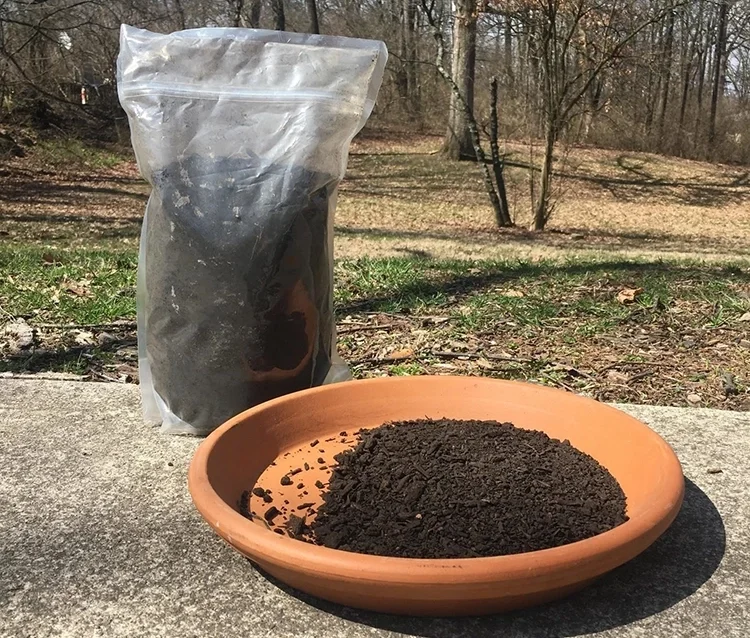
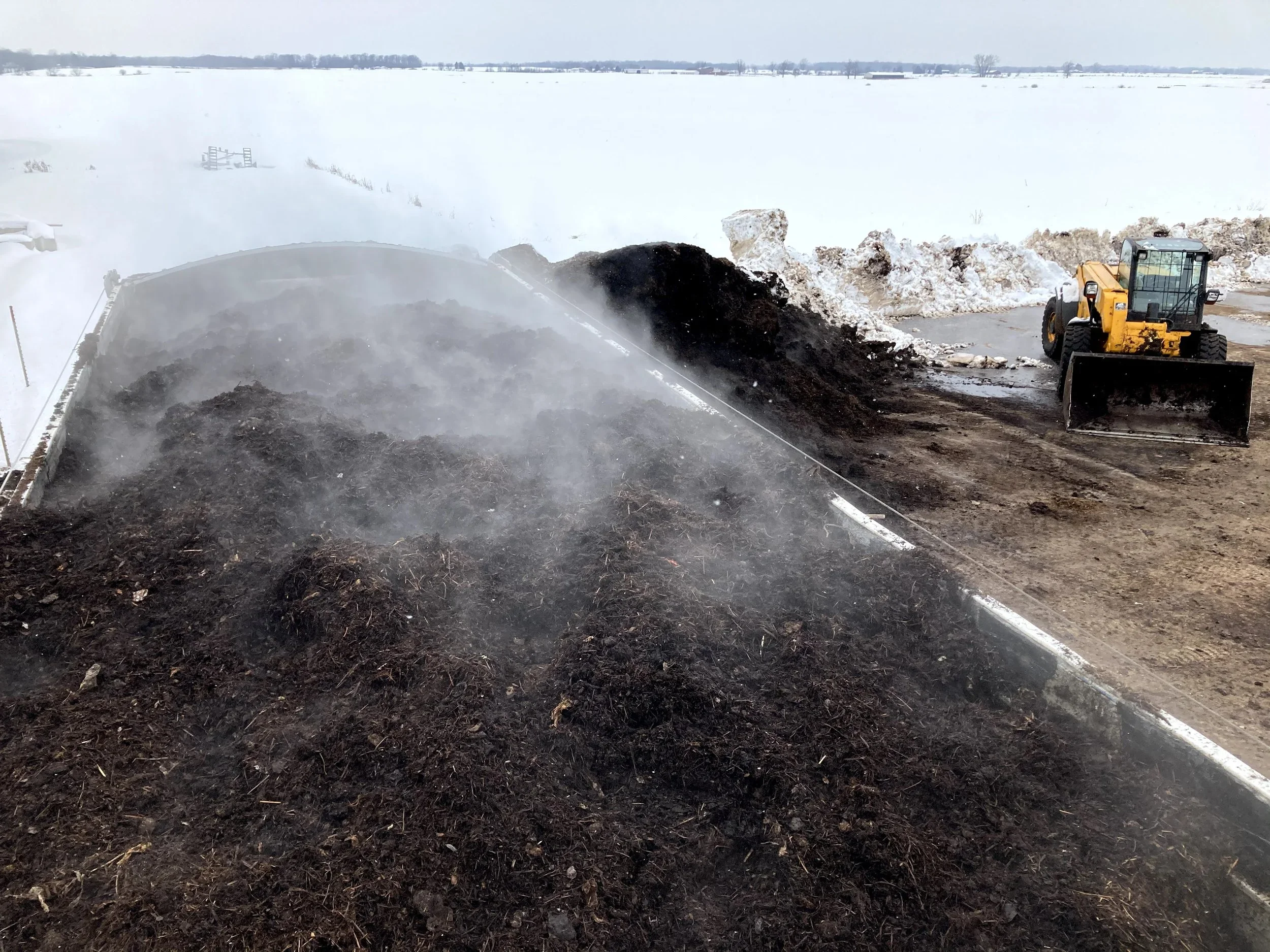
GoZERO offers compost produced by its family farm partner, Andre Farms Compost. We're selling finished 5/8" grade compost in bulk quantities from 1 to 30 cubic yards per truck load. Delivery inside our current service area is $230 for the first yard, with each additional yard only $70 more. There are also limited pickup appointment slots available at our facility outside Zanesfield, starting at $150 for the first yard and $70 for each additional yard.

Contact us online or at 888-467-0874 to arrange delivery or pickup. If you'd rather order online or for smaller bagged quantities, go to gozero.org/marketplace to make your selection.

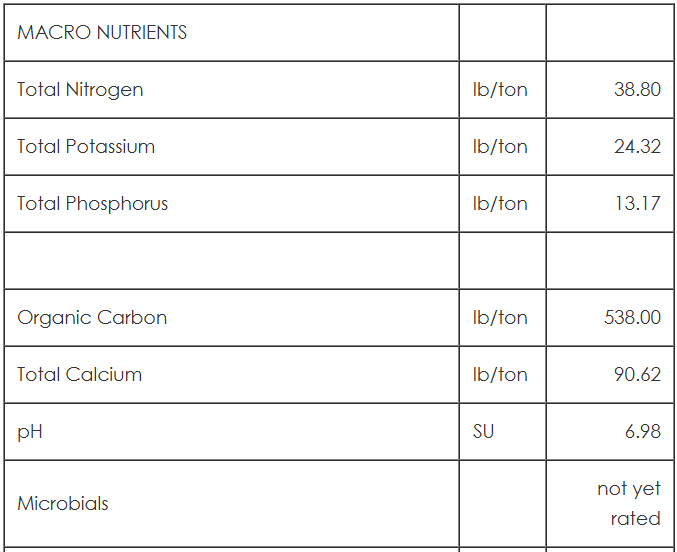
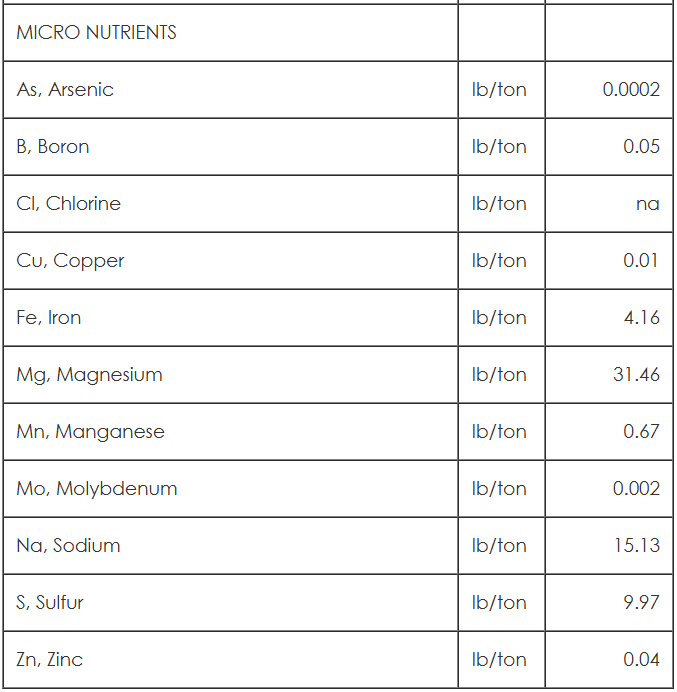
This season's product has been EPA- and STA-tested and approved, with excellent nutrient content (see below), for your flower garden and veggie patch.


 How Much Compost Do I Need? 

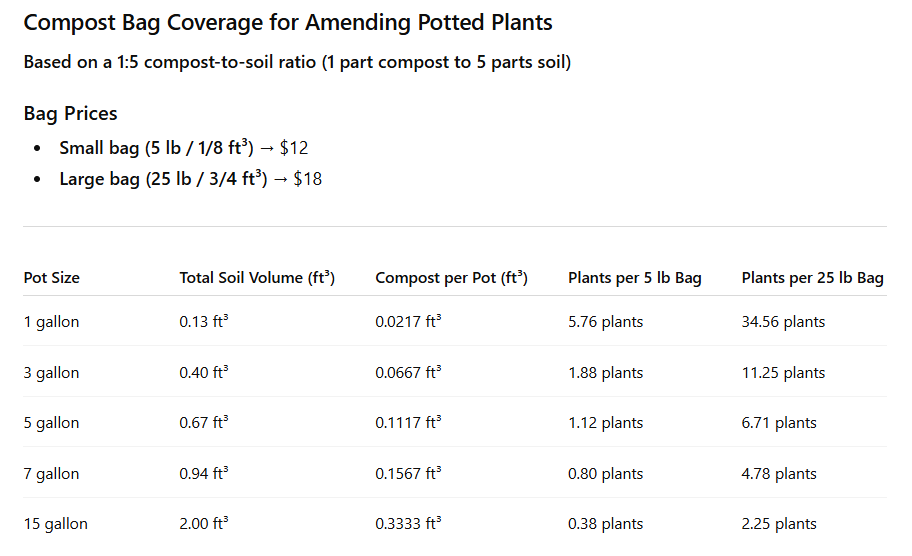
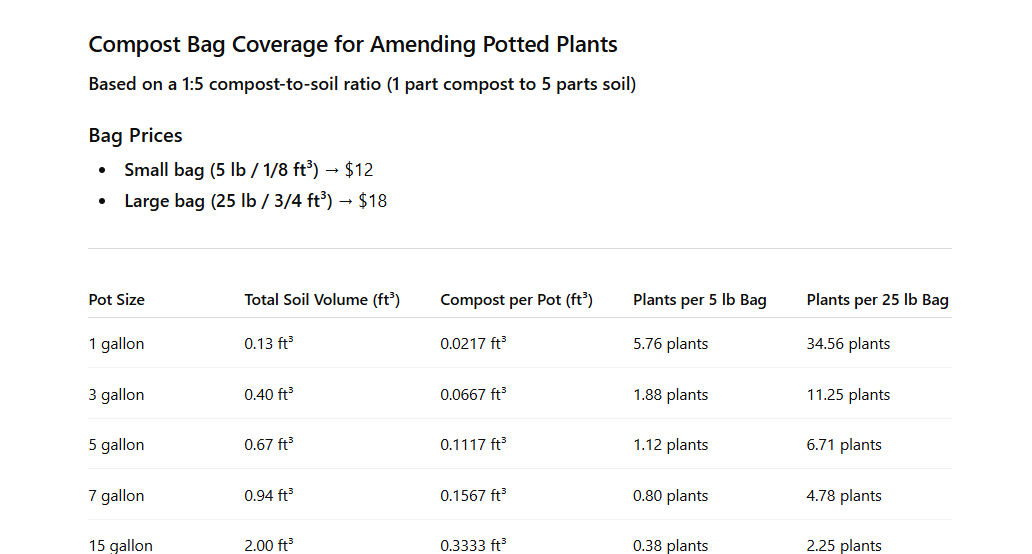
For potted plants, 15–20% of total pot volume, or a 1:5 ratio of compost to soil, works best. Keep in mind, this is only a quick reference for potted plants– compost as an amendment is versatile and can be used for other soils as well.


What are GoZERO's Compost-Related Products?

Where there is composting, there will be compost. We offer several grades of compost, bagged or bulk, as well as connections to compostable product outlets, other related equipment, and relevant items.

To best understand what a specific situation calls for, request an estimate

Compost & Composted Products

Bulk Garden ready ½" screened compost $70/yard

Bulk Farm ready 2" screened compost $50/yard

35 lb bag garden-ready ½" screened compost $60

5 lb bag garden-ready ½" screened compost $20

Loading fee for pickup or delivery $90

Delivery trip charge in the core service area $90

Compostables (see compostables vendor list page)

64-gallon compostable cart liner $2

8-gallon compostable bucket liner $.50

Equipment & Apparel

5 Gallon Branded Bucket $9

Easy Peel Style Bucket Lid $3

Branded Carts $60

Cart Wheel or Axle Replacements $8

Cart Lids $15

Spring 2026 Compost Content

Compost is a soil amendment, NOT a fertilizer. In some applications, such as erosion control or runoff mitigation, it's used to retain nutrients. For this reason, compost is typically used for its soil and plant health! Compost nutrients are organically bound and readily available to growing plants and to depleted soil. Andre Farms Compost is made from a proprietary blend of compostable food, yard, and animal waste byproducts.